

















In short
As a rule of thumb: for domestic flights, arrive at the airport 90 minutes before departure; for flights within Europe, allow 2 hours; and for long-haul flights, allow 3 hours. At major hubs like Frankfurt and Munich, it's best to plan for the upper end of these timeframes, while Düsseldorf and Hamburg are usually quicker. With online check-in and no hold luggage, you can skip the check-in desk altogether.
Last updated: 23 April 2026 · We update this guide regularly – security wait times and check-in desk opening hours can vary depending on the season and airport.
Arriving too early at the airport means hours of waiting around – arriving too late means a hectic dash and, in the worst case, a missed flight. We show you the optimal arrival time depending on your destination, airport and airline. Plus: 5 practical tips for a smoother check-in and security experience.
How early you should arrive at the airport before your flight
Check-in often already done online, quick security, no passport control
Standard check-in, security, boarding – buffer for the unexpected
Passport and security checks, customs, long queues during peak times
Important: These times are guidelines. During the summer holidays, at weekends and during major events (trade fairs, sporting events), you should arrive 30–60 minutes earlier than usual.
How early at the major UK and European airports?
Airports have varying processing capacities and waiting times. Here's our overview of five major hubs:
| Airport | Domestic / EU | Long-haul | Notes |
|---|---|---|---|
| London Heathrow (LHR) | 2 hrs | 3 hrs | Busiest UK hub, long security queues at peak times |
| Frankfurt (FRA) | 2 hrs | 3 hrs | CT scanners at all checkpoints from 18 September 2026 (liquids up to 2 l), more on liquid rules |
| London Gatwick (LGW) | 90 min | 2.5 hrs | Usually smooth, but prone to traffic delays on approach |
| Manchester (MAN) | 90 min | 2.5 hrs | Compact airport, short walking distances |
| Edinburgh (EDI) | 90 min | 2.5 hrs | Busy during Festival season and Scottish school holidays |
London Heathrow (LHR) – the UK's busiest hub
Heathrow is the UK's largest airport, handling 80+ million passengers a year. Waiting times can be correspondingly long. Plan for 2 hours for European flights and 3 hours for long-haul. On peak travel days (Friday and Sunday evenings, start of school holidays), add another 30 minutes. Advantage: Heathrow's terminals are well connected, and many security lanes now use modern CT scanners that allow liquids over 100 ml.
Manchester (MAN) – efficiency over long queues
Manchester Airport is known for being one of the more efficient in the UK. Widespread CT scanners make security checks quicker and easier. 90 minutes to 2 hours before domestic/EU flights, and 3 hours for long-haul, should be enough.
Gatwick (LGW) – compact but prone to traffic
Gatwick is easy to navigate: it's rarely more than a 10-minute walk from security to the gate. Still, allow 90 minutes (EU) or 2.5 hours (long-haul). The main risk is the journey to the airport itself – traffic on the M23 or rail delays can throw off your timing.
Edinburgh (EDI) – quick through security
Edinburgh Airport is compact and well organised. 90 minutes for EU flights and 2.5 hours for long-haul are usually sufficient. Exception: summer Saturdays, Fringe Festival season and early morning flights during school holidays – arrive 30 minutes earlier during these periods.
Frankfurt (FRA) – Europe's biggest hub
Frankfurt Airport handles over 160 million passengers a year, making it one of the busiest hubs in Europe. Waiting times can be substantial. Allow 2 hours for European flights and 3 hours for long-haul, adding another 30 minutes on peak travel days. Advantage: Frankfurt has two terminals with a Skyline shuttle and new CT scanners at many security lanes.
Domestic flight – 90 minutes is usually enough
On domestic flights, there's no passport control and often no strict baggage weighing either. If you're travelling with hand luggage only and have completed online check-in, 60–90 minutes is generally plenty. Hold baggage desks usually close 45 minutes before departure.
International flight – allow 3 hours
Stricter checks apply to flights outside the EU/Schengen area (USA, Asia, Africa, South America):
- Passport control on departure
- More thorough security checks (liquids check, electronics)
- Boarding begins 45–60 minutes before departure
- ESTA / visa may already be checked online, but spontaneous questions at the gate are possible
Allow at least 3 hours, or 3.5 hours for US flights. You'll find more details on the process in our step-by-step airport guide.
Airline-specific arrival times
Lufthansa
Lufthansa recommends: 90 minutes domestic, 2 hours EU, 3 hours long-haul. Online check-in opens 23 hours before departure – saving time at the desk. Hold baggage at hubs like Frankfurt and Munich should be checked in at least 45 minutes before departure. Check Lufthansa's hand luggage rules beforehand.
Eurowings
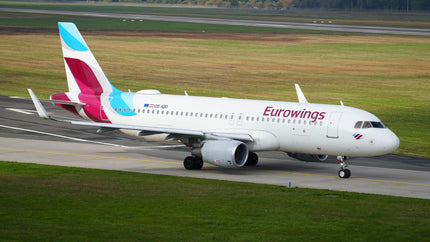
Eurowings advises arriving 2 hours before departure – even for domestic flights. Check-in desks close 40 minutes before departure, with boarding starting 30 minutes prior. See our Eurowings guide for hand luggage and fare details.
Ryanair
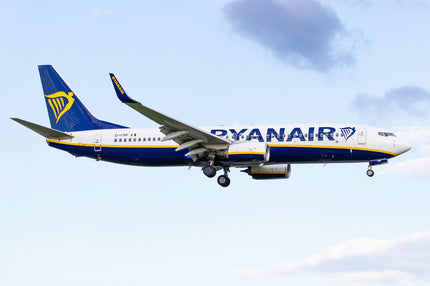
Ryanair is stricter: check-in desks close 40 minutes before departure, and online check-in is mandatory (or you'll face a £55 fee at the airport). Hand luggage dimensions are checked closely at the gate – it's worth reviewing the Ryanair baggage rules in advance.
British Airways
British Airways recommends 2 hours before departure for European flights and 3 hours for long-haul flights. Online check-in opens 24 hours in advance, saving you time at the desk. During peak holiday periods (summer, school holidays), it's best to arrive 30 minutes earlier.
KLM, EasyJet & other airlines
Most international airlines recommend 2 hours for EU flights and 3 hours for long-haul. For connecting flights with tight layovers, it's best to plan generously – a delayed first leg can cost you your connection.
5 tips for a stress-free departure
Use online check-in
Opens 24–48 hours before departure via the airline app or website. Having your boarding pass on your smartphone saves time at the desk.
Keep documents to hand
Passport, boarding pass, visa, ESTA – ideally kept in a dedicated document wallet so you can grab them quickly.
Allow plenty of time for the journey
Trains and cars can be delayed. Build in a buffer of 30–60 minutes. Booking airport parking in advance also saves money.
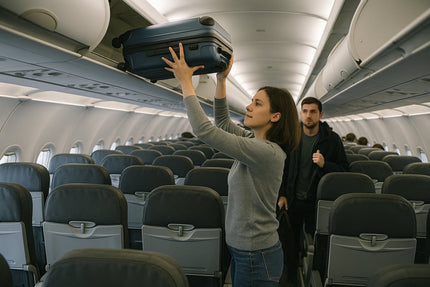
Check your hand luggage dimensions
Strict checks are carried out at the gate. A correctly sized cabin case can save you rebooking fees of up to £75.
Avoid security peak times
Peak hours are 6–9am and 4–7pm. Flights outside these windows usually mean shorter queues and less stress.
Prepare for security in advance
Take liquids and your laptop out of your bag beforehand, remove your belt, and place your phone in the tray. This keeps things moving quickly.
Watch out at the start of the holidays: During summer and Christmas holiday weekends, security queues at major hubs like Heathrow, Frankfurt and Berlin can be significantly longer. Arrive 30–60 minutes earlier during these periods.
Frequently asked questions about airport arrival times
How early do I need to be at the airport for a domestic flight?
90 minutes before departure is usually enough for domestic flights. With online check-in and hand luggage only, 60–75 minutes can suffice. Hold baggage desks usually close 45 minutes before departure.
How early for an EU/European flight?
2 hours before departure is the standard recommendation. During peak times (Friday and Sunday evenings, start of school holidays, bank holidays), it's best to allow 2.5 hours, especially at major hubs like Frankfurt and Heathrow.
How many hours before a long-haul flight?
3 hours is the minimum for flights to the USA, Asia, Africa or South America. For US flights, 3.5 hours is safer, due to additional security questions and passport checks.
When does the check-in desk close?
Usually 45 minutes before departure. With budget airlines like Ryanair, it can be as early as 40 minutes. Online check-in avoids this issue entirely – get your boarding pass on your phone or printed, and drop off luggage at a self-service bag drop if needed.
What should I do if I arrive at the airport too late?
Head straight to the airline desk, or a "late check-in" counter if available. If you miss your flight, request a rebooking. If you're cutting it fine, explain your situation to security staff – sometimes you may be allowed to go ahead in the queue.
Should I eat or shop at the airport?
Only if you have enough time to spare. 60 minutes before boarding is fine for a quick bite, but after that it gets tight. More importantly, make sure you reach the gate in time – depending on the terminal, this can mean a 10–20 minute walk.
In summary: better relaxed than rushed
The rule of thumb is simple: 90 minutes for domestic flights, 2 hours for EU flights, and 3 hours for long-haul. Add a 30-minute buffer during peak times or at major airports. Stick to these timeframes, and your journey will be exactly what it should be: relaxed and enjoyable.
For more travel advice, check out our guides on what happens at the airport, liquids in hand luggage and an overview of suitcase sizes.